Sunday, December 12, 2010

Invisible hostiles!


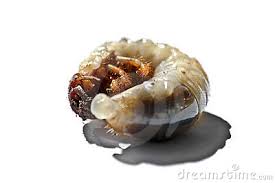
Unbeknown to us, creatures lurk in the darkness of the underground! Fat, parasitic grubs that are clearly hungrier than we are! Like the rotting foundation of an old house, these critters slowly munch away at the roots of plants, leading to the mysterious collapse of whole building! Our grubs are after the beet roots - a sad event! Due to our aversion to chemicals, fighting them off will have to become a cosmic task. A dear friend advised us to fill an aluminium pie-tin with fresh cucumber and put it in the garden.
Apparently the reaction between the aluminium and cucumber gives off a scent that sends certain pests like slugs and underground hostiles running. We are awaiting their mass evacuation! Some more advice was given to us.. Plant more!! Sharing is caring, so why not plant some more beetroots, thus there will be plenty for us and nature will get some too!


Friday, December 10, 2010

The Zucchini bed.

We had planted some baby-marrow (zucchini) seeds about a week and a half ago into a tray of six. Finally, one breaks through. A day or two passes without any others breaking through the soil. Eventually it became apparent that the others were duds and we were going to have to make due with just one for now and plant some more later.

Building the bed.
The spot we chose for the lone baby-would get great sun, but was neighboured by lots of bamboo, whose roots are very strong and hard to remove. We therefore decided to make a raised bed using a string of small logs, that we got from the nursery (seeing as we couldn't find something in our backyard to do this!). We dug into the ground to mix up some of the clay-ish soil - the soil here was a bit better than that of our first two beds. Then we started mixing in compost and a bit of our garden soil.

Once the empty shape had been filled, we planted one lonely-zucchini into it's new massive bed - although we had been told they do go crazy and cover a lot of ground. We watered the bed and let if settle in.
Trekker and the Zucchini.

Wednesday, December 8, 2010

Catching A Dream

With everything we had planted till thus far peacefully stretching their roots and leaves, the time had come to add some more personal touches to the garden. A bit of raking here, weeding away the latest batch of tiny intruders that seem to pop up daily and fantasizing about what our garden will look like by March 2011, can only take you as far.

We decided to make our own giant dreamcatcher from some of the wood that we had recently machete'd off to allow some more sun into our overgrown garden. We started by taking some smaller branches that hadn't dried out yet and twisting two together at a time into an arc-shape, then securing them with string into this position. We kept adding on twisted-branch arcs until we had a big full circle.


Once the outline was ready, we carefully wound cotton-wool around some areas to decorate it. We decided afterwards, that it would have been better to do the net first and then do this, seeing as the points where the fastens onto the frame will then run over the other wool, making it a bit rough - but, this was fine for now.


I started with the netting, but buggered it up after about 20 minutes and had to restart.. The joys of trial and error! This time I followed a circular netting pattern using one single long piece of wool. Seeing as we wanted to suspend a rose-quartz crystal (the size of a fist!) right in the centre of the net, I went over every part three times (Yes, it took long - better way would have been to take three threads of the same length and do them simultaneously - noted for future projects!) to hold up the crystal's weight. After the net was done, it was just a matter of decoration. Each of us three added our own touches to the massive web, ranging from feathers, old bracelets, smaller stones and crystals to our centre-piece.

The end product was even more beautiful than we had imagined. It found its place in our garden with ease, joining our other smaller dreamcatchers, as it was hung from a strong hemp rope. Whether it is, as many of the Native-Americans believed, catching bad energy passing through it's web or simply colouring in our garden, we were one more step closer to our own backyard-paradise.
Although this photo doesn't do it's size much justice,
the circle has a diameter of about 1 meter (+/-  3.28 feet)

Monday, December 6, 2010

The HOT SPOT - Attention all chilli lovers!

The Hot spot is a post to follow if you are a chilli-lover. Whether using jalapeños as the main dish (as popper), or using bird's eye or habanero for additional flavour and spice, chilli's are essential in my kitchen. Chillies play a huge part in my life and ultimately, what would our garden be without some spice?

I have planted a chilli-mix, jalapeños and hot baby peppers from seed. We sowed them at the same time we did the sunflowers and I was bitterly disappointed when the sunflowers snuck out, but no sign from my hot-seedlings. Another week past and yet - nothing. Just before giving up hope, my mother (also a big chilli-fan), told me that chilli-seeds take really long to pop-out. They grow super-slowly, therefore require a lot of patients. So, if you're a chilli-lover or a rookie-planter (such as myself!), don't be de-motivated if your chillies are not growing as quickly as your other plants - they like to take their sweet time!

So, a HOT SPOT post, will be published every-so-often to show progress, if any, as I am still waiting on my hotties :) and to include you on the road of chilli-growing. Recipes and facts about chillies will also be included, so keep your eyes open for the next HOT SPOT.


Jalapeno chillies -
image taken from http://www.greenbarngardens.com/catalog/i68.html

Friday, December 3, 2010

Our Melon Patch & Unexpected Visitor

It was an early morning when I decided to carry on with fining the clay ground between our proud bouganvilla & bamboo. My dog was patiently sitting beside me watching the activities of the early morning. It was then I heard a rustle in the bamboo behind me. I thought nothing of it at first as our kitty spends most of her time in the garden. It was upon a second rustle that my very brave, yet confused dog, Trekker, jumped up and looked at me as if calling me with his eyes.
I knew not to take his reaction lightly as it was peculiar behavior. I dropped the spade and peeked around the corner only to discover - eeeeeeeeeek!! - a Boomslang! (Tree-snake - directly translated). 


A Boomslang -
image from http://www.africanreptiles-venom.co.za/boomslang.html
It was slithering away from the bamboo where I stood, had a peek into my sister's bedroom and shot high up into the next patch of bamboo. I must have frightened it with the shoveling. She was a beautiful, fully-grown femail of about 1,2 to 1,3 meters long - better check for eggs!
She did not hang around too long, but long enough for everyone to see her greatness. She cut her visit short by sailing of into the neighbour's yard. What an experience!


Despite the goosebumps that I had for the entire day, we all chipped in and finished our watermelon patch, knowing that the spirit of the snake watches over them. Our watermelons received lots of compost as the ground had many stones which had to be removed. We found some rich top soil beneath some trees further down in our 'jungle', which we also used. The patch was decorated with a big log and bamboo sticks and of course our beautiful tree bark!

Wednesday, December 1, 2010

Seeds


Seeds are life. It has always amazed me, this miracle of growth, transformation and manifestation. Seeds represent new life, birth. Without seeds, nothing would exist. From such a tiny object, something as majestic and massive as the Giant Redwoods of California, are born. Each with a purpose and a link to every ecosystem on earth. Seeds are to be treasured, they are more special than we realize. Already seeds have been patented. Huge corporations are capitalizing on- and monopolizing those precious gifts from nature.

Already there is too much mass control of which seeds to buy, how to grow them, quantities thereof and how much they yield. Many seed-banks offer seeds - especially for commercial farming - that produce fruits and flowers whose seeds are sterile. Just so you can go and buy more! If you have plants that produce usable seeds, keep them and look after them. Treasure them! Watch this space and follow the birth, growth and flowering of our beautiful sunflowers.

Tuesday, November 30, 2010

The Nutty Butts

On our last trip to the nursery we brought along some watermelon and butternut squash starts that were looking for a new home, along with more compost and bark. We decided to create a bed below the first two beds, where the butternuts are sure to get good sun. We wanted to make this bed different so we decided to make a circle shaped bed to create some visual differentiation.


Mimilu and myself began to clear the  ground after it was picked of stones and unnecessary roots (per usual), however  this time round the roots took  exeptionally long because we discovered thick, tough roots that poised a fight of note. But alas, after tugging, pulling, cutting and chopping we eventually managed to complete and  prepare the ground.

This area of the garden has a slight slope and there where the butternut bed is, the slope sightly steepens, therefore when we mixed the ground together with our compost and levelled out the bed to
prevent any unnecessary run-off. Yay, our butternut patch is ready! We
placed the starts in the circle formation and surrounded the bed with pieces of cut bamboo. We then began to finish off that area by making it a united patch. We completed the stone formation by linking it to the other two beds and placed the other bark pieces onto the path.

Sunday, November 28, 2010

Tomatie Party

So the time had come to plant our little tomato starts that have been waiting so patiently to be planted. We once again began to pick away at the oh-so-barren clay ground that we are faced with. But after some vicious picking, we managed to mix in our bags of compost and introduced the tomatoes to their new home. 


Before planting the starts, Yakattack first cut some bamboo poles which we rooted into the ground to act as support posts for when the starts get to the right height. On completion of the bamboo supports and settling the starts we surrounded the new bed with stones and spread some bark as a garnish. As tomatoes grow upward, we decided to put a butternut squash and cucumber in the same bed as they grow along the ground thus making the
tomatie party so much more fun...

Friday, November 26, 2010

Re-use, Re-cycle, Re-new

To make beautiful things, to make things beautiful or simply to create beauty, doesn't always need money. With child-like imagination we can turn any thing or any space into something beautiful - and useful! To create our pathway we didn't have to venture further than our fathers backyard. Discarded pieces of random tiles were stacked awaiting regeneration - a new purpose. Things aren't easily wasted at his house. Now we have a pathway that connects different areas of our garden and turned the dreary clay plains into art!

Thursday, November 25, 2010

Our Blog is Carbon Neutral

We are proud to say that we have joined our blog to the Carbon Neutral initiative, which aims to help reduce carbon dioxide emissions. They plant a tree for your blog and thereby neutralise your blog’s carbon footprint for the next 50 years! Everyone can make a small contribution to the environment. Every tree counts!

The following was taken from the Mach's grün website to give you some back-ground:

The trees are planted in Plumas National Forest in Northern California by “Arbor Day Foundation” their partner in US for the “My blog is carbon neutral” initiative. The “Arbor Day Foundation” is a non-profit conservation and education organization with the goal helping reforest 5,500 acres of Plumas National Forest with 792,000 trees.
bildschirmfoto
A series of lightning strikes triggered the Antelope Complex Fire on July 5, 2007, which burned nearly 23,000 acres of Plumas’ timber in less than a week. The Moonlight Fire struck just two months later, destroying 65,000 forest acres and requiring more than three weeks to contain.

On September 5, 2007 the Moonlight Fire was advanced by northerly winds through the Plumas National Forest in Northern California. According to reports from the National Forest Service, the fire had grown to 28,000 acres since its start on September 3. This image from the NASA’s Aqua satellite shows the fire spreading smoke over the Sacramento Valley on September 5.
moonlightfire
image: NASA earthobservatory

Visit http://www.kaufda.de/umwelt/carbon-neutral/ to add your blog to this great initiative or for more information.